For years, recycling has been widely promoted as the solution to the growing waste problem. However, in reality, recycling should be the last step in responsible waste management. According to SWCorp, Malaysia’s national recycling rate rose to 37.9% in 2024, up from 35.38% in 2023, reflecting steady progress toward the 40% target set under the Twelfth Malaysia Plan.
Despite this improvement, a significant amount of waste, including recyclable materials such as metals and plastics, continues to end up in landfills. This is largely due to challenges such as inadequate collection infrastructure, contamination of recyclables, illegal dumping, and weak enforcement.
Why Recycling Should Be the Last Resort
Recycling is important, but it is not the magic solution many believe it to be.
Recycling manages waste. It doesn’t prevent it.
Recycling only deals with materials after they’ve been produced, used, and thrown away. By that point, resources have already been extracted, transported, manufactured, and packaged, all contributing to waste and emissions.
2. Recycling still has a carbon footprint
Sorting, transporting, and processing recyclables require energy. Even “eco-friendly” materials like paper and plastic generate emissions when recycled. So while recycling is better than sending waste to landfills, it’s not impact-free.
3. “Wishcycling” causes more harm than good
Many people place items in the recycling bin hoping they are recyclable. This exact behaviour is known as wishcycling. Examples of items that are commonly "recycled" include greasy food containers, plastic bags, contaminated packaging, or mixed-material products.
Wishcycling can:
Contaminate entire batches of recyclables
Increase processing costs
Cause truly recyclable items to be rejected and landfilled
Why We Must Start With REFUSE Before the 3R’s

Refuse = Prevention at the Source
Instead of the traditional 3R (Reduce, Reuse, Recycle) approach, we should adopt the 5R framework as guidance for our waste management efforts. Refusing is the most powerful and impactful step in waste management. When we say no to unnecessary items such as single-use plastics, freebies, disposable cutlery, and excessive packaging, we stop waste before it even enters the system.
Every item refused is:
✓ A product that never needs to be produced
✓ A resource that never needs to be extracted
✓ A piece of waste that never enters the landfill or recycling bin
Refusing reduces pressure on recycling facilities and addresses waste at its root cause, making it the most effective action individuals can take. Repurposing (or upcycling), on the other hand, helps minimise the consumption of new raw materials and avoids the energy-intensive processing involved in recycling.
What if someone asks...
“Even if I refuse something, for example, a cutlery set offered when I make a food purchase, the person next to me will still say yes to it. And the store itself already have boxes of cutlery in their storeroom. How does my refusal help in avoiding products from being produced?”
We asked ChatGPT and see how it explains this 🙂:
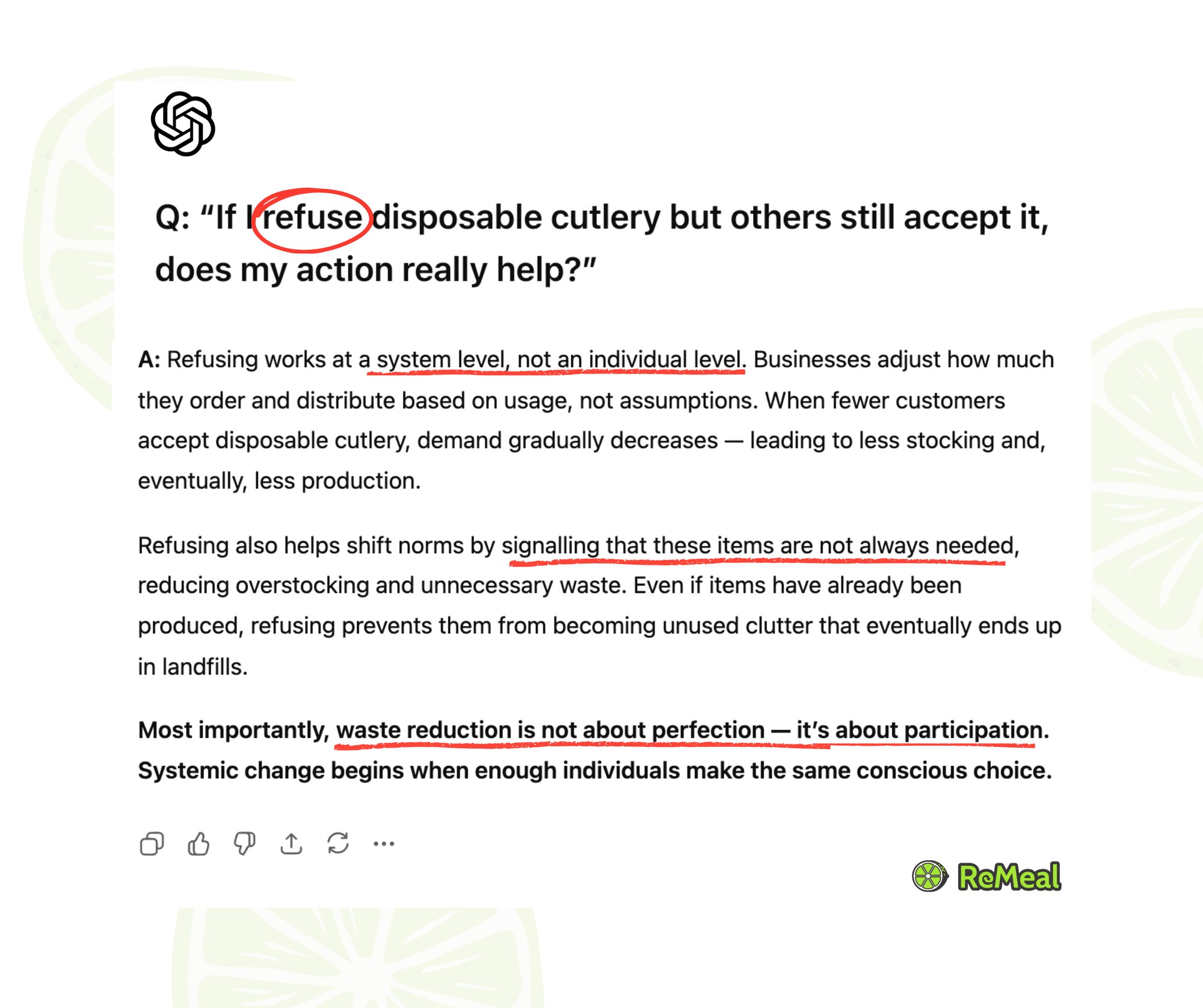
We hope this article helps clarify why refusing unnecessary items is such an important first step in responsible waste management. By choosing to pause and say "NO" before making a purchase or accepting something we don’t truly need, we can prevent waste at its source and reduce the strain on our environment!